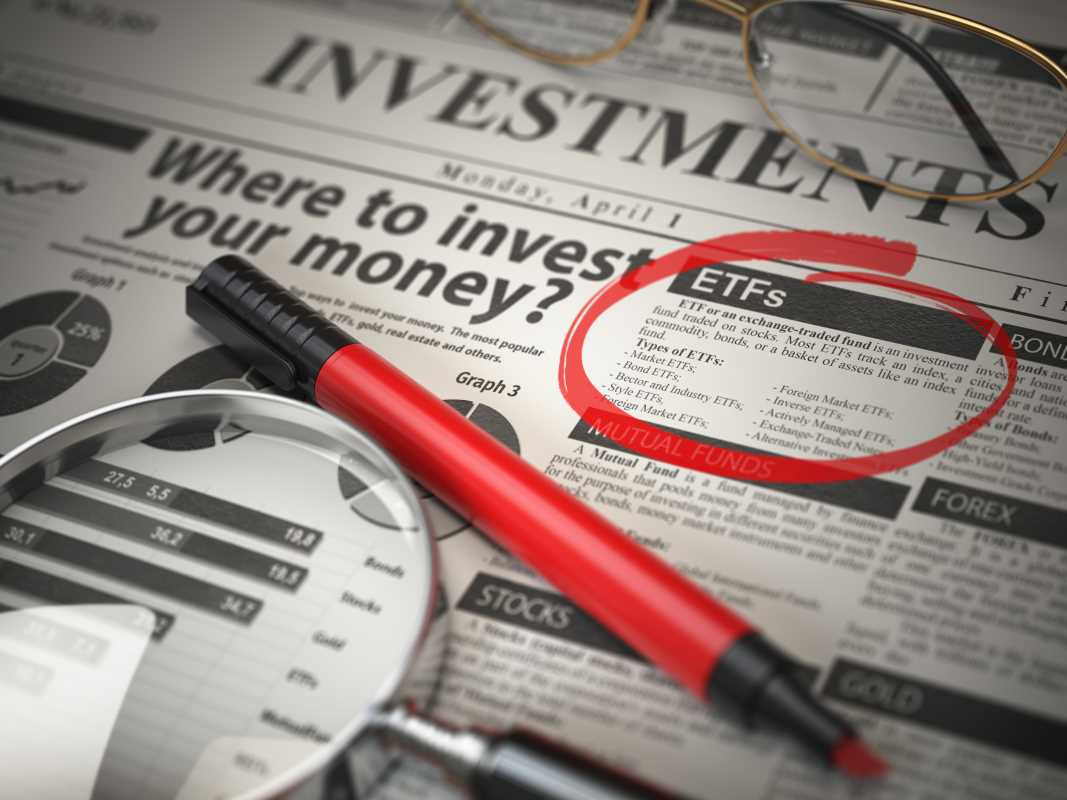
If the stock market were a high school cafeteria, individual stocks would be the popular kids, flashy, dramatic, and prone to spectacular public meltdowns. Mutual funds would be the teachers' lounge, sensible, a little stuffy, and inexplicably expensive to get into. Exchange Traded Funds (ETFs), however, are the cool transfer student who somehow gets along with everyone. They offer the diversification of a mutual fund with the trading flexibility of a stock, all wrapped up in a package that costs less than a fancy latte.
ETFs have revolutionized the way normal people build wealth. They have democratized access to markets that used to be reserved for guys in suspenders shouting on a trading floor. But just buying an ETF isn't a strategy; it's a purchase. To truly harness their power, you need a plan. You need to know how to mix and match these financial Legos to build a fortress of solitude for your money.
Investing in ETFs can be as simple or as complex as you want to make it. You can be the "set it and forget it" type who checks their portfolio once a decade, or the active tactician who treats asset allocation like a fantasy football league. Regardless of your style, the goal is the same: to make your money work harder than you do. Here are the best strategies to turn those ticker symbols into a retirement plan that doesn't involve winning the lottery.
Build A Core And Satellite Portfolio
Imagine your portfolio is a dinner plate. The "Core and Satellite" strategy is about deciding what is the main course and what are the side dishes. The core is your steak and potatoes, the solid, reliable sustenance that keeps you alive. In investing terms, this should be a broad-market ETF, like a total stock market fund or an S&P 500 tracker. This core makes up the vast majority of your portfolio, perhaps eighty or ninety percent. It is boring, it is stable, and it captures the general growth of the global economy.
The "Satellite" portion is where you get to have some fun. This is the spicy salsa or the experimental truffle fries on the side. These are smaller positions in more specialized ETFs that you think might outperform the broader market. Maybe you believe artificial intelligence is the future, or you think clean energy is about to explode. You can buy sector-specific ETFs to target these areas without betting the farm.
This strategy is brilliant because it protects you from your own hubris. We all like to think we can pick the next big trend, but statistically, we are usually wrong. By keeping your speculative bets small (the satellites), you can scratch that itch to be an active investor without jeopardizing your financial future. If your clean energy ETF tanks, your massive core holding in the S&P 500 will keep your portfolio afloat. It allows you to be ninety percent responsible adult and ten percent reckless speculator, which is a pretty healthy balance for life in general.
Embrace The Lazy Portfolio Approach
There is a pervasive myth in our culture that working harder equals better results. In the gym, this is true. In investing, it is often false. The "Lazy Portfolio" strategy is built on the idea that doing less can actually make you more money. This approach involves building a simple portfolio of just two or three broad ETFs and then doing absolutely nothing for thirty years.
A classic example is the "Three-Fund Portfolio." You buy one ETF for the total US stock market, one for the total international stock market, and one for the total bond market. That is it. You now own thousands of companies across the globe and a diverse array of debts. You have achieved maximum diversification with minimum effort.
The beauty of this strategy lies in its psychological benefits. Because you are not constantly tinkering, researching, or trying to time the market, you are less likely to make emotional mistakes. You won't panic-sell when the news is bad because your strategy is designed to ride out the storms. You just contribute money regularly and rebalance once a year to keep your percentages in line. It turns investing into a background process, freeing up your brain power for more important things, like figuring out why your printer never works when you really need it to.
Implement A Dollar Cost Averaging Schedule
The scariest question for any investor is, "Is now the right time to buy?" We look at charts, read tea leaves, and listen to pundits who are wrong fifty percent of the time. The truth is, nobody knows what the market will do tomorrow. It could skyrocket, or it could crash. The Dollar Cost Averaging (DCA) strategy eliminates this anxiety by removing the element of timing altogether.
With DCA, you commit to investing a fixed amount of money into your chosen ETFs at regular intervals, regardless of the share price. Let's say you invest five hundred dollars on the first of every month.
- When the market is booming and prices are high, your five hundred dollars buys fewer shares.
- When the market crashes and everyone is screaming, your five hundred dollars buys more shares.
- Over time, your average cost per share evens out.
- You avoid the risk of dumping all your money in at the absolute peak.
- It enforces a discipline of saving that is hard to break.
This strategy transforms market volatility from a source of fear into a mathematical advantage. When the market dips, you aren't losing money; you are picking up shares on sale. It forces you to "buy low" automatically, without needing the courage to click the buy button when the world feels like it is ending. It is the financial equivalent of putting your investment life on cruise control.
Rotate Sectors Based On Economic Cycles
If you prefer to be a bit more hands-on and want to try to beat the market averages, sector rotation is a strategy worth exploring. The economy moves in cycles, expansion, peak, contraction, and trough. Different industries tend to perform better during different phases of this cycle. Sector ETFs allow you to target these specific areas of the economy with surgical precision.
For example, when the economy is booming and people are spending money freely, "cyclical" sectors like consumer discretionary (think luxury goods, cars, and travel) and technology tends to outperform. When the economy slows down or enters a recession, investors flock to "defensive" sectors like utilities, healthcare, and consumer staples (toothpaste and toilet paper), because people still need these things even when they are broke.
By using ETFs that track these specific sectors, you can tilt your portfolio to align with the economic climate. If you see storm clouds on the horizon, you might reduce your exposure to tech ETFs and increase your holdings in a utilities ETF. It requires more attention and research than the lazy portfolio, as you need to have a view on where the economy is heading. But for the engaged investor, it offers a way to play the macroeconomic trends without having to pick individual company winners and losers. You are betting on the tide, not the boat.
Utilize Factor Investing For Enhanced Returns
Factor investing, also known as "smart beta," is for the investor who wants to add a layer of scientific rigor to their strategy. Academic research has identified certain characteristics, or "factors," that have historically delivered higher returns than the broader market over long periods. These factors include things like value (stocks that are cheap relative to their earnings), momentum (stocks that are already going up), quality (companies with strong balance sheets), and low volatility (stocks that don't jump around as much).
In the past, targeting these factors required complex analysis and expensive active management. Today, there are ETFs specifically designed to capture these factors. You can buy a "Value ETF" that automatically filters the market for cheap stocks, or a "Momentum ETF" that buys the highest flyers.
This strategy allows you to tilt your portfolio toward historical drivers of outperformance. For instance, you might hold a core S&P 500 fund but supplement it with a "Small-Cap Value" ETF, because history suggests that small, undervalued companies tend to grow faster than massive ones over the very long term. It is important to note that factors can underperform for years at a time, value stocks spent a decade in the wilderness while tech stocks soared, so this strategy requires patience and a strong stomach. But if you stick with it, factor investing offers a way to potentially boost your returns by harnessing the fundamental laws of market physics.
Investing in ETFs is not about finding a magic bullet. It is about finding a philosophy that lets you sleep at night. Whether you choose the hyper-efficient path of the lazy portfolio, the automated discipline of dollar cost averaging, or the tactical maneuvering of sector rotation, the vehicle, the ETF, remains the same. It is a tool of immense power, low cost, and flexibility. The strategy you choose is simply the user manual you write for yourself. So, pick a plan, stick to it, and let the miracle of compounding do the heavy lifting while you go enjoy your life.
All content published on BestExpense is for informational and editorial purposes only and does not constitute financial, investment, legal, or business advice. BestExpense is not a licensed financial advisor or broker. Readers should conduct their own research and consult qualified professionals before making any financial or business decisions. BestExpense is not affiliated with any financial institution or advisory firm unless explicitly stated.