 (Image via
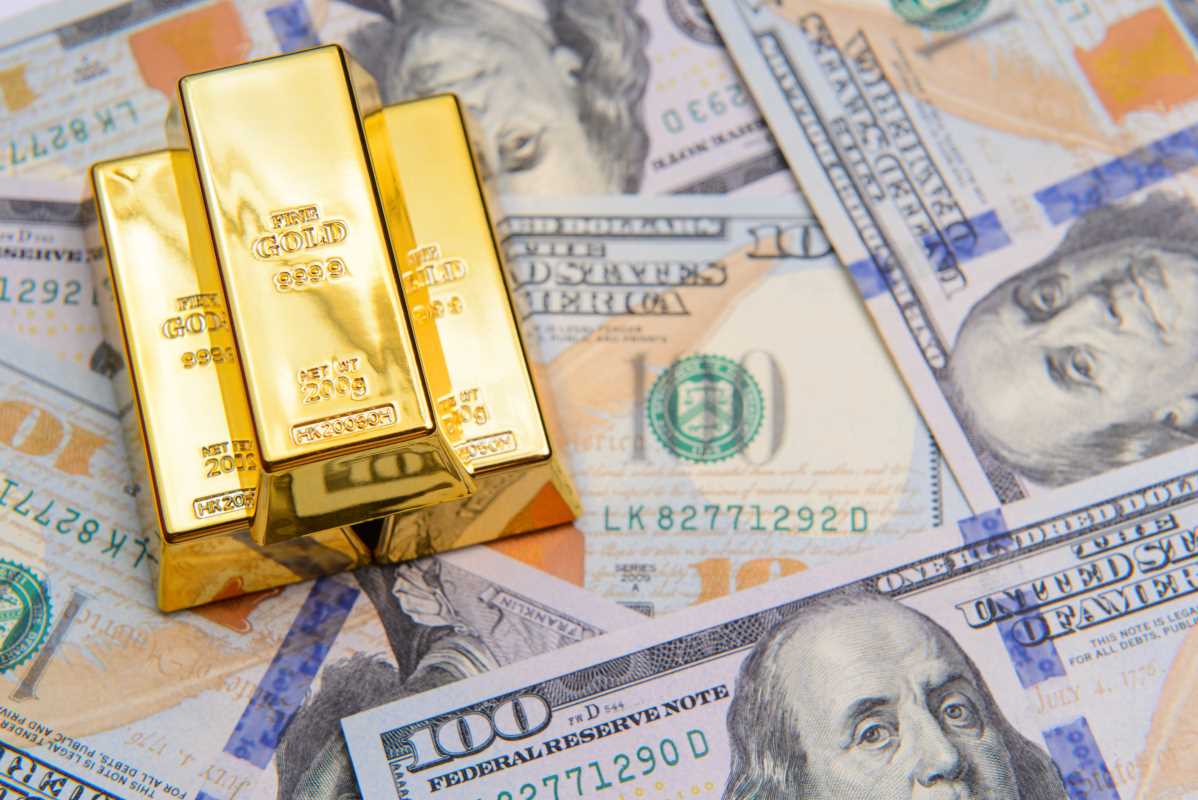
Gold. It is the stuff of legends, pirate maps, and rappers' dentistry. For thousands of years, humans have been irrationally obsessed with this shiny, yellow metal. Empires have risen and fallen for it. Alchemists wasted entire lifetimes trying to turn lead into it. And today, when the stock market starts acting like a toddler who missed a nap, investors flock to it like moths to a very expensive flame.
Precious metals, gold, silver, platinum, and palladium, occupy a unique space in the financial world. They aren't companies that produce goods. They don't pay dividends. They just sit there, looking pretty and chemically stable. Yet, they are revered as the ultimate "safe haven." When inflation rears its ugly head or geopolitical tensions rise, gold is the financial equivalent of a bunker stocked with canned beans. It is the tangible asset that says, "I don't trust paper money, but I do trust atomic number 79."
Investing in precious metals used to mean burying a chest of doubloons in your backyard and hoping the neighbors didn't see you. Fortunately, modern finance has evolved. You no longer need a shovel or a treasure map to get exposure to heavy metals. Whether you want to physically hold the gold or just trade numbers on a screen, there are multiple avenues to channel your inner Smaug. Here are five distinct ways to add some glitter to your portfolio.
Buy Physical Bullion And Hide It Under The Mattress
There is something undeniably primal about holding physical gold. Feeling the weight of a gold coin or bar in your hand triggers a deep, reptilian part of the brain that whispers, "wealth." Buying physical bullion, coins, bars, or rounds, is the most direct way to own precious metals. You are not buying a promise; you are buying the actual element.
This method appeals to the doomsday prepper in all of us. If the digital financial system collapses, cyber-hackers erase bank records, and society reverts to a barter economy, your digital gold ETF will be worthless. But a one-ounce gold Eagle coin? That will still buy you a goat and safe passage through the wasteland.
Unfortunately, owning physical metal comes with logistical headaches. You have to buy it from a reputable dealer to avoid getting sold a gold-plated tungsten bar. You have to store it securely, which means investing in a high-quality safe or paying for a safety deposit box at a bank (which sort of defeats the purpose of being outside the banking system). And when you want to sell, you can't just click a button. You have to physically take it to a dealer, who will likely pay you slightly less than the spot price. It is the most "real" way to invest, but it is also the most cumbersome. It is heavy, it takes up space, and if you lose it, there is no "forgot password" link to get it back.
Invest In Exchange Traded Funds That Track The Metal
If the idea of guarding a safe full of gold bars sounds like too much responsibility (or if you just have a bad back), Exchange Traded Funds (ETFs) are the perfect solution. Gold and silver ETFs allow you to invest in the metal without ever touching it. These funds essentially do the heavy lifting for you. They buy massive quantities of physical gold, store it in high-security vaults that look like movie sets, and then sell shares that represent a fraction of that hoard.
When you buy a share of a gold ETF, you own a claim on the gold, but you don't have to worry about insurance, storage fees, or thieves. It trades just like a stock. You can buy and sell it instantly during market hours through any brokerage app. It is liquid, convenient, and the fees are generally quite low compared to the premiums you pay for physical coins.
This is the preferred method for most casual investors who want exposure to price movements without the hassle of physical ownership. However, purists will argue that "if you don't hold it, you don't own it." Technically, you own a piece of paper (or a digital record) that says you own gold. In a total societal collapse, you can't redeem your ETF shares for physical bullion. But for the 99.9% of the time when society isn't collapsing, ETFs are the most efficient vehicle for metal investing. You get all the price action with none of the heavy lifting.
Purchase Stock In Mining Companies
Instead of betting on the metal itself, why not bet on the guys with the pickaxes and dynamite? Investing in mining stocks is a way to gain leverage on the price of gold or silver. When the price of gold goes up, a mining company's profits can explode exponentially.
Here is the logic: It costs a mining company a fixed amount of money to pull an ounce of gold out of the ground, let's say $1,200. If gold is trading at $1,300, they make a $100 profit. But if gold prices rise just 10% to $1,430, their profit margin more than doubles to $230. A small move in the metal price can lead to a huge move in the stock price. Plus, unlike the metal itself, well-run mining companies can pay dividends. You actually get paid to wait for prices to rise.
However, this is not a risk-free trade. Mining is a brutal, capital-intensive business. You are exposing yourself to operational risks that have nothing to do with the price of gold.
- Mines can collapse or flood.
- Workers can go on strike.
- Governments in unstable regions can nationalize the mines or hike taxes.
- Management can make terrible decisions and bankrupt the company.
- Environmental regulations can shut down operations overnight.
When you buy a mining stock, you are betting on both the commodity price and the competence of the company's management. It is a high-risk, high-reward play that can leave you feeling like a genius or a fool, often within the same week.
dabble In Futures And Options Contracts
This is where the professionals play, and where beginners often lose their shirts. Futures and options are derivative contracts that allow you to bet on the future price of precious metals with massive leverage. You aren't buying gold; you are making a legal agreement to buy or sell gold at a specific price on a specific date.
The allure here is the leverage. You can control a large amount of gold with a relatively small amount of capital. If you bet correctly, your returns can be astronomical, far higher than simply owning the metal. It is the financial equivalent of nitrous oxide in a street race.
But leverage cuts both ways. A small move in the wrong direction can wipe out your entire investment in minutes. Futures markets are fast, volatile, and unforgiving. They are dominated by algorithmic traders and institutional sharks who eat retail investors for breakfast. Unless you have a deep understanding of market mechanics, technical analysis, and risk management, this is less "investing" and more "gambling with a tuxedo on." It is a valid way to invest in gold, but it requires nerves of steel and a very healthy bank account to absorb the inevitable swings.
Collect Numismatic And Rare Coins
For those who view investing as an art form rather than a spreadsheet exercise, numismatic coins offer a fascinating alternative. This is the intersection of history, art, and precious metals. You are buying coins not just for their gold or silver content (melt value), but for their rarity, historical significance, and aesthetic condition.
A rare pre-1933 gold coin might contain an ounce of gold worth $2,000, but because it was minted in a specific year or has a rare mint mark, it might sell to a collector for $5,000 or $10,000. You are betting that the collector value, the "numismatic premium", will rise over time, independent of the spot price of gold. It is similar to investing in classic cars or fine art.
The downside is that this is a highly specialized field. You need to know what you are doing. The market is rife with counterfeits, over-graded coins, and smooth-talking dealers trying to sell you "rare" coins that are actually quite common. The spread between what you pay (retail) and what a dealer will pay you back (wholesale) can be massive. If you buy a coin for $1,000, you might only be able to sell it back for $700 the next day. You need to hold for a long time to overcome that gap. Investing in numismatics is a labor of love. You have to enjoy the hunt and the history, because if you are just in it for the quick buck, you are likely to get burned. But if you have an eye for detail and a passion for the past, it is the most beautiful way to hold wealth.
Investing in precious metals is a personal journey. Whether you choose the safety of an ETF, the tangible weight of a gold bar, the leverage of a mining stock, the adrenaline of futures, or the history of a rare coin, you are participating in a tradition as old as civilization itself. Just remember that gold doesn't produce anything. It doesn't innovate. It just sits there. But sometimes, in a chaotic world, sitting there and not disappearing is the most valuable thing an asset can do.
All content published on BestExpense is for informational and editorial purposes only and does not constitute financial, investment, legal, or business advice. BestExpense is not a licensed financial advisor or broker. Readers should conduct their own research and consult qualified professionals before making any financial or business decisions. BestExpense is not affiliated with any financial institution or advisory firm unless explicitly stated.